
By Commercial Service Company · July 16, 2026
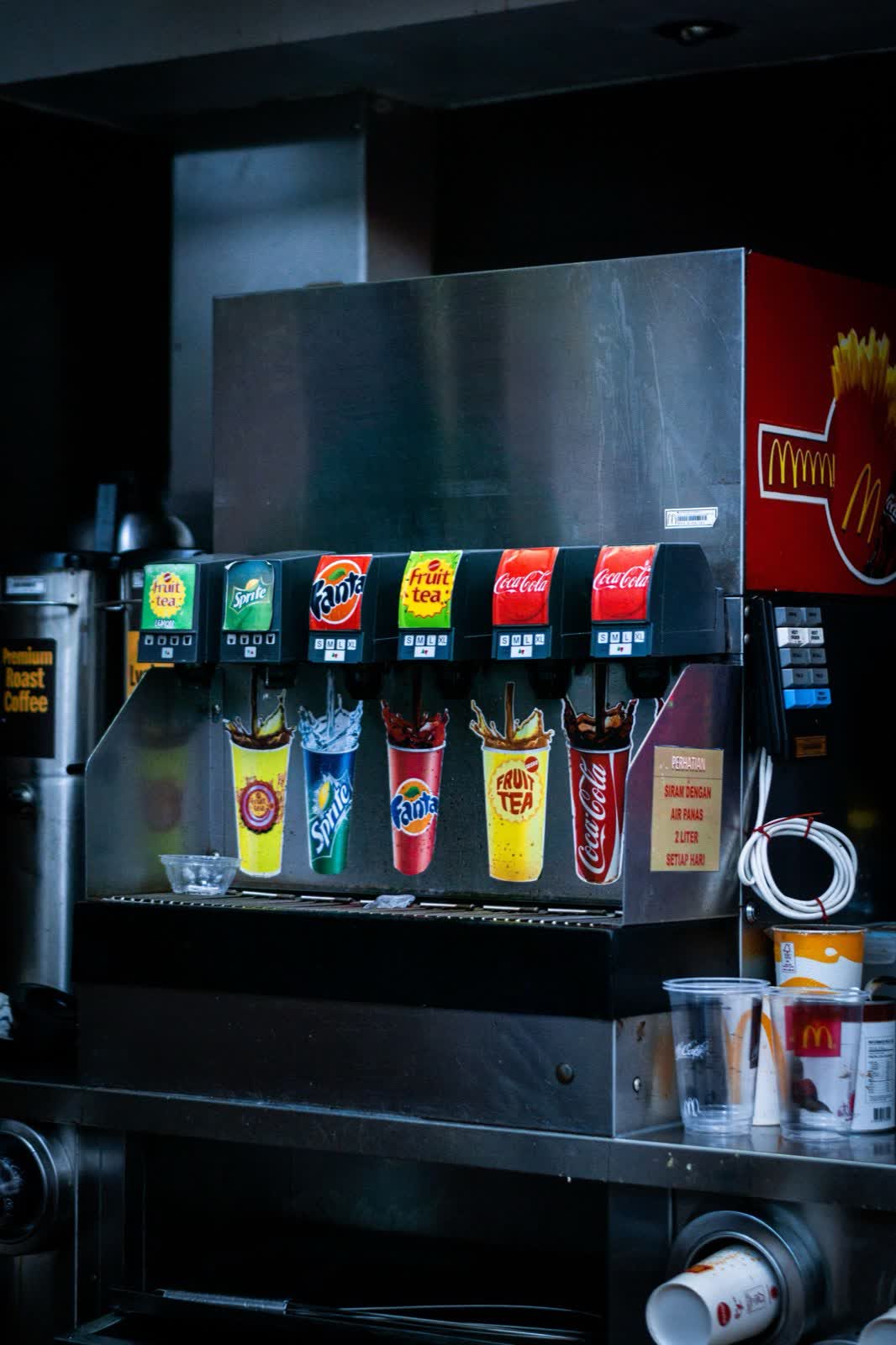
Fountain beverages are quietly one of the highest-margin items you sell — syrup, carbonated water, and a cup. Which is why a fountain pouring flat, slow, or strange is a direct hit to some of your easiest revenue, and why customers who get one bad drink remember it. Here's how the system works and where it goes wrong.
Flat drinks: the CO2 chain
Carbonation depends on CO2 supply and cold water. Work the chain: Is the CO2 tank low or empty? Is the regulator set to spec? Is the carbonator (the pump-and-tank unit that makes soda water) running? And is the water actually cold? Warm water simply won't hold carbonation — a failing ice bin or cold plate makes every drink pour flat no matter how much gas you give it.
Weak or strong taste: ratio problems
Every valve mixes syrup and soda water to a set ratio (the trade calls it brix). When a drink tastes watery, a syrup bag-in-box may be empty, a syrup pump starved, or the ratio drifted. When it's syrup-heavy or the ratio wanders drink to drink, the valve needs professional adjustment with a brix cup — a quick job with the right tool, guesswork without it.
Slow pour: flow restrictions
Slow valves usually mean clogged strainers or lines, a tired pump, or ice starving the cold plate. Slow gets slower; it never heals itself.
Off-taste: the one to take seriously
A fountain that tastes “off” across all flavors usually has a water-filtration or line-cleanliness problem. Syrup lines and nozzles grow films over time; nozzles and diffusers should be cleaned daily by staff, and lines belong on a scheduled professional cleaning cycle. This is drink quality, health-code hygiene, and brand reputation in one item.
What staff can own
- Daily: remove and wash nozzles and diffusers; wipe the dispensing area.
- Watch CO2 levels and know who changes tanks and when.
- Swap empty bag-in-box syrup promptly (an air-sucking pump wears fast).
- Keep the ice bin filled — on ice-cooled units, ice is the refrigeration.
What a service visit covers
Brix testing and adjustment on every valve, carbonator and pump checks, filter changes, line and nozzle sanitizing, and cold-plate or refrigeration diagnosis. Commercial Service Company has serviced beverage systems across central Arkansas since 1976 — restaurants, convenience stores, and concessions. If your fountain isn't pouring the way it did when it made you money effortlessly, call 501-548-2374.
Frequently asked questions
Why are my fountain drinks flat even with a full CO2 tank?
Usually warm water. If the ice bin is low or the cold plate/refrigeration is failing, water can't hold carbonation regardless of CO2 supply. Regulator settings and a failed carbonator are the next suspects.
How often should soda fountain lines be cleaned?
Nozzles and diffusers daily by staff; syrup lines and internal components on a scheduled professional cycle. Films in lines affect taste first and hygiene second — both are avoidable with a schedule.
What is brix and why does it matter?
Brix is the syrup-to-water ratio of a finished drink. Off-ratio valves quietly waste syrup (your money) or serve weak drinks (your reputation). Techs set it with a measuring cup made for the job.